
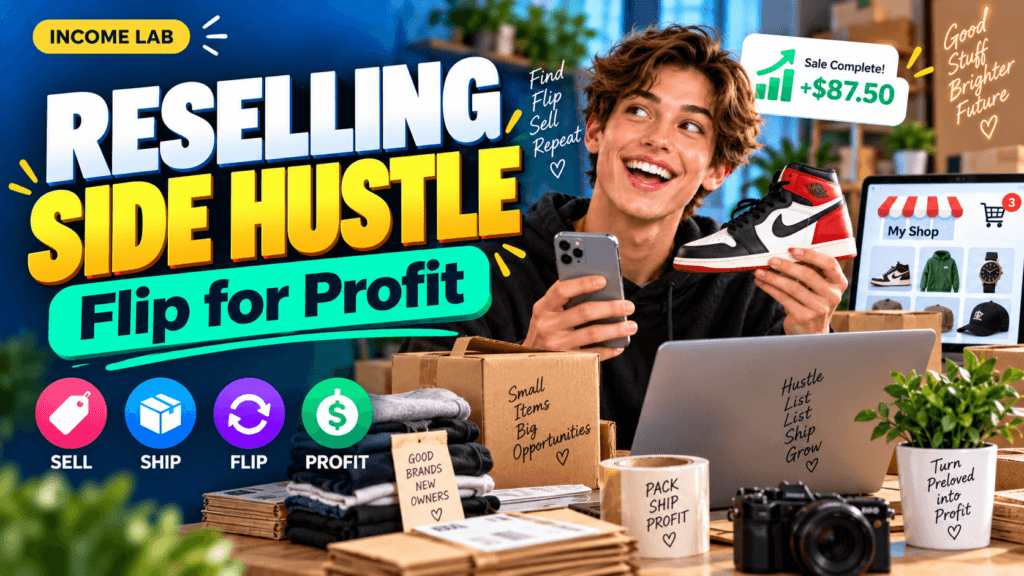
A reselling side hustle is simple in principle: acquire an item for less than a buyer will pay, then manage the listing, transaction and delivery efficiently enough to keep a profit. The difficult part is not finding things that appear valuable; it is understanding actual sold prices, fees, condition, shipping and how long your money may remain tied up in inventory. Beginners should start with items they already own rather than spending heavily on stock. That turns the first sales into low-risk training and reveals whether you enjoy the photography, research, negotiation and fulfillment work that reselling requires.
Start With Items You Already Own
Look through clothing, books, electronics, sports equipment, hobby gear, tools and household items you no longer use. These products let you practice without risking cash on inventory. Clean them, test functionality where relevant and describe condition honestly. Record what you expected the item to sell for versus the final net amount after fees and shipping. The purpose of this first phase is not only to raise money; it is to learn which categories you understand and how much work each sale requires. After ten or twenty sales, you will have better evidence about whether sourcing additional inventory makes sense.
Research Sold Prices, Not Optimistic Asking Prices
Marketplace listings show what sellers hope to receive, which can be very different from what buyers actually pay. Where a platform provides completed or sold listings, use them to estimate realistic market value. Compare condition, model, size, included accessories and recent demand. A rare item may have a high asking price but almost no buyers. A common item may sell quickly at a modest margin. Your sourcing decision should account for both profit and sell-through speed. Inventory that takes six months to move has a different cost than an item that sells in three days, even if the eventual margin is similar.
Calculate Net Profit Before You Buy Inventory
Profit equals sale price minus acquisition cost, platform fees, payment fees, shipping supplies, postage, returns and other direct expenses. Your time also matters. A $20 gross margin may not be attractive if you spend an hour driving to source the item and another hour listing and packing it. Create a simple spreadsheet with purchase price, expected sale price, actual sale price, fees and days to sell. This data will quickly show which categories are worth repeating. Do not rely on revenue screenshots from other resellers; a business can move large amounts of product while earning surprisingly little after costs.
Choose a Category You Can Evaluate Quickly
Specialization can reduce costly mistakes. Someone who understands cameras may notice model differences that a general reseller misses; a sneaker seller may recognize condition issues and authenticity risks; a book reseller may know which editions matter. You do not need to remain in one category forever, but expertise improves sourcing speed and pricing confidence. Avoid high-counterfeit categories until you can authenticate products reliably. Selling counterfeit goods can create platform and legal consequences even if you did not manufacture them. When in doubt, leave the item behind rather than gamble on authenticity.
Take Photos That Reduce Buyer Uncertainty
Use bright, even lighting and show the actual item from multiple angles. Include close-ups of labels, model numbers, wear, damage and important accessories. Do not hide flaws; undisclosed defects increase returns and disputes. The title should include useful searchable attributes, while the description should clarify condition, measurements and what is included. Good listings save time because buyers ask fewer repetitive questions. A smartphone is usually enough for beginner photography, making reselling one of the stronger phone-based side hustles.
Control Inventory Risk as You Scale
Once you start buying stock, set a sourcing budget and maximum amount you are willing to have tied up at one time. Do not reinvest every dollar into more inventory without keeping cash for fees, shipping and unexpected returns. Track aging stock and lower prices or bundle items that are not moving. A reseller’s biggest risk is often not a single bad purchase but hundreds of small purchases that slowly lock up capital. Growth should come from better buying decisions and faster turnover, not simply owning more items.
Build a Repeatable Listing and Fulfillment Process
Batch similar work to save time. Photograph several items in one session, then create listings together and designate a clean storage area where sold products can be found quickly. Keep packaging supplies organized and ship within the timeframe promised. As volume grows, use SKU labels or another simple inventory system. The operational side of reselling becomes increasingly important because a misplaced item or late shipment can erase the profit from several successful sales. Standardized processes also show whether the side hustle can scale beyond casual selling.
Know When Reselling Is Better Than Selling a Service
Reselling requires capital and inventory risk but can be flexible because you control when you source and list. A service-based side hustle often requires less cash but depends more directly on your time and customer appointments. Compare your effective hourly return and stress level after a few months. If you enjoy sourcing and product research, reselling may fit. If you dislike inventory and shipping, consider service-based side hustles instead. You can also begin by selling possessions through our guide to things to sell for quick cash.
Frequently Asked Questions
How much money do I need to start reselling?
You can start with no inventory budget by selling items you already own. Reinvest only after you understand fees, pricing and what sells.
What are good items to resell?
The best items are categories you can evaluate accurately and source below realistic market value. Demand, condition and shipping cost matter more than trends alone.
Is reselling profitable?
It can be, but only if you track net profit after acquisition cost, fees, shipping, returns and time. Revenue alone does not prove profitability.
Where should beginners sell?
Choose a marketplace where buyers already search for your category and understand its fees, seller protections and shipping rules before listing.
Should I buy inventory in bulk?
Not at the beginning. Test individual items and categories first so one poor sourcing decision does not tie up a large amount of cash.
How do I avoid counterfeit products?
Avoid categories you cannot authenticate, research model details carefully and never list an item as genuine when you are uncertain.