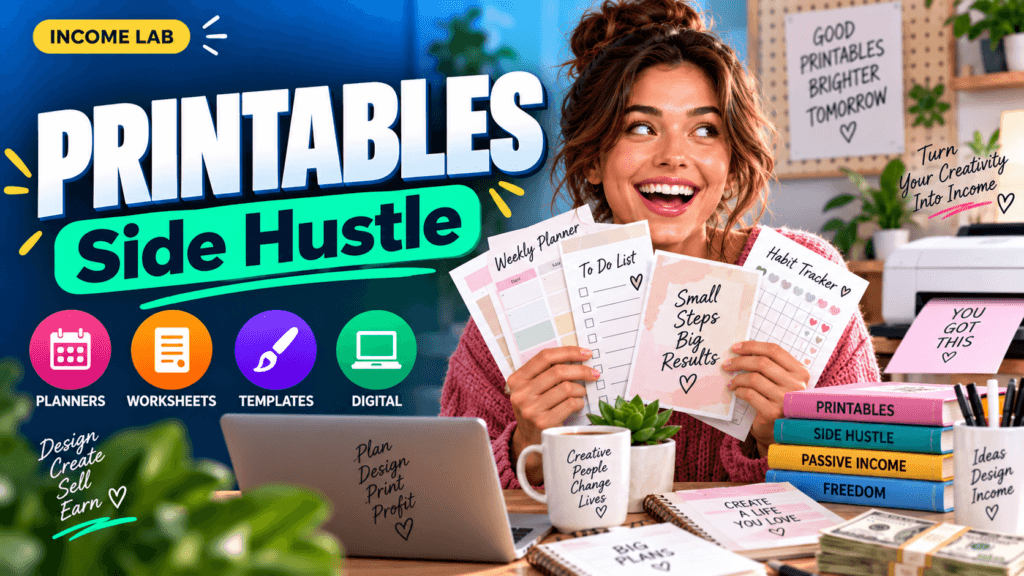
A printables side hustle can be started with relatively little money, but the ease of creating printable files also means generic products face intense competition. The business is not simply designing attractive pages; it is identifying a specific use case where a printable saves time, organizes an activity or helps a buyer complete a task. Strong products can include worksheets, checklists, trackers, event materials, educational resources and specialized planners. The most reliable strategy is to validate a narrow problem first, create one excellent product and expand around buyer demand instead of flooding a marketplace with dozens of unrelated files.
Start With a Use Case, Not a Decorative Theme
A buyer searches for a printable because they need something: a classroom activity, budget tracker, party game, cleaning checklist, meal planner or event sign. Design matters, but usefulness comes first. Search marketplaces and communities for repeated needs and pay attention to customer reviews that mention missing features, confusing layouts or print problems. Narrow audiences can be powerful because they let you build pages around real workflows. A generic planner may compete with thousands of alternatives, while a planner designed around a specific profession, event or routine can be much easier to explain and differentiate.
Validate Demand Before Creating a Large Bundle
Beginners often assume a larger bundle automatically provides more value. In reality, creating fifty pages before knowing whether buyers want the product can waste significant time. Start with a small, complete product that solves one problem. Publish it with strong previews and watch what happens. Clicks without sales may indicate weak pricing, trust or product details. No clicks may indicate poor targeting or presentation. Questions from buyers can reveal missing features. Use that feedback to decide what to create next. A focused product family built from real demand is usually stronger than a store full of disconnected printables.
Design for Real Printing Conditions
A printable must work outside your design software. Test margins, font size, grayscale readability and common paper dimensions. Avoid placing important text too close to edges where consumer printers may crop it. If you provide multiple sizes, label each file clearly. For fillable or editable versions, test them using the software buyers are expected to use. Attractive mockups should never hide usability problems. Print at least one copy yourself if possible, because spacing and contrast often look different on paper than on a bright screen.
Create Preview Images That Explain the Product
Digital buyers cannot hold the item before purchasing, so listing images need to answer practical questions. Show representative pages, explain the number and type of files, indicate sizes and clarify whether the product is editable. Lifestyle mockups can help buyers imagine the result, but include flat, readable previews too. Do not make a digital download look like a physical product if no physical item will be shipped. Good previews reduce confusion, support conversion and lower customer-service burden. They also help differentiate a thoughtfully built product from low-effort files.
Price Based on Utility and Competition
Printable pricing should consider the problem solved, product depth, design quality, included formats and competitive alternatives. More pages do not automatically justify a higher price. A specialized one-page form used repeatedly by a professional may be more valuable than a long generic bundle. Very low prices can attract volume but leave little room for advertising, support or platform fees. Test pricing gradually and look at conversion and customer feedback instead of racing to the bottom. Bundles can raise average order value after individual products have proven demand.
Use Keywords Naturally Around Buyer Intent
Search-driven marketplaces and websites need clear product titles and descriptions that reflect what buyers actually search. Use the primary phrase where it fits naturally, then describe audience, occasion, format and outcome. Avoid stuffing every related keyword into the title. The product itself should match the search intent; a buyer looking for a teacher worksheet should not land on a generic planner simply because the listing contains the phrase. Strong SEO begins with product-market fit, then helps the right buyer discover it.
Build a Catalog Around One Customer
Once a printable sells, ask what the same buyer might need next. A wedding planner buyer may need checklists, signage and budget tools. A teacher buying one worksheet may need a related activity set. Expanding around the same customer creates natural bundles and cross-selling opportunities. It also makes your shop or website feel coherent. This strategy mirrors the broader digital product side hustle model: validate one problem, then build depth around proven demand.
Protect Quality and Intellectual Property
Use fonts, graphics and templates according to their licenses and avoid copying competitors’ layouts or wording. Inspiration from market structure is different from duplicating a product. If you use AI-assisted graphics or copy, review the output carefully and make sure it meets platform rules and licensing requirements. Keep source files organized so you can update products when buyers report issues. A long-term printable business depends on trust, originality and consistent usability—not the fastest possible upload volume.
Frequently Asked Questions
What printables sell well?
Products tied to clear tasks—education, organization, events, budgeting, routines and professional workflows—tend to be easier to position than purely generic decorative pages.
Do I need expensive design software?
No. Many printable products can be created with accessible design or office tools. The important factors are licensing, usability and export quality.
How many printables should I launch?
Start with one or a few tightly related products, validate demand, then expand based on buyer behavior rather than guessing.
Should I sell bundles?
Bundles work best after individual product needs are understood. Combining unrelated pages simply to increase page count rarely adds meaningful value.
Can printables become passive income?
They can become semi-passive, but research, listing optimization, customer support, updates and marketing still require ongoing work.
How do I avoid copying competitors?
Study buyer needs, pricing and feature gaps, then create your own structure, wording, visual design and value proposition from scratch.