A feature is not automatically a benefit. It becomes a benefit only when it removes a problem you actually have. That is the best way to evaluate Home Service Agency Studio, a WordPress-based system designed around building, demonstrating and delivering websites to local home-service businesses.
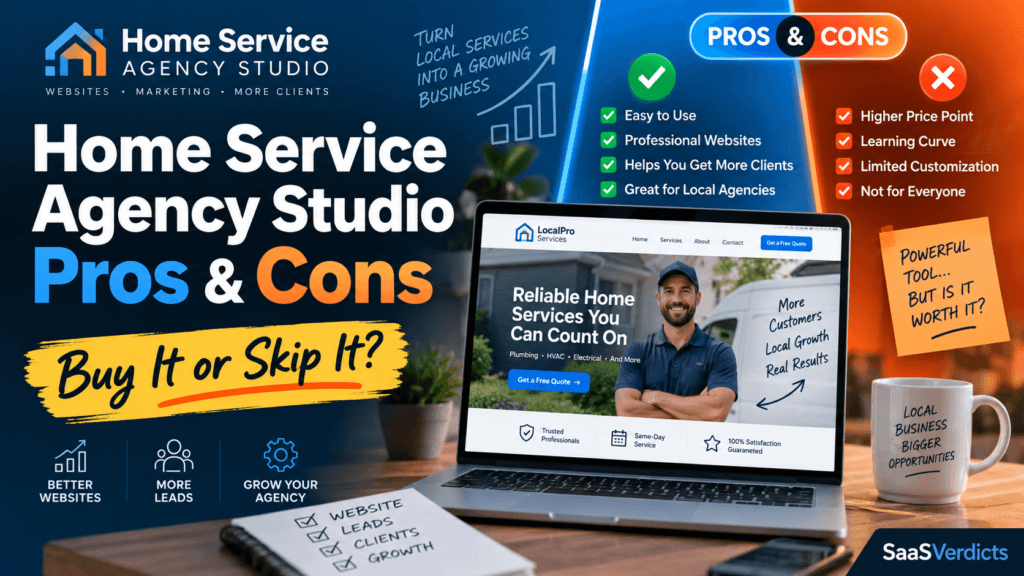
- Five prepared website styles.
- Ten home-service niche packs in the core offer.
- Prospect-demo workflow.
- Repeatable WordPress delivery process.
- Low current launch entry price.
- Useful foundation for agency retainers.
- No automatic client acquisition.
- Normal WordPress hosting and maintenance remain.
- Core styles are starting points, not custom development.
- Advanced automation and niche expansion cost extra.
- Your sales ability still matters.
Pro #1: It begins with a business model, not a blank canvas
One reason website builders become overwhelming is that they give you unlimited possibilities without telling you what to sell. Home Service Agency Studio does the opposite. The positioning is narrow: websites for home-service businesses. That constraint can be valuable because it gives you an immediate prospect pool, relevant examples and a service that is easy to explain.
Pro #2: The demo can make cold outreach feel warmer
The prospect-demo concept is the strongest part of the offer. Showing a local business something relevant to its own company can create more curiosity than a generic portfolio. It does not guarantee a response, but it gives your outreach a reason to exist beyond “I build websites.”
Pro #3: Niche packs remove repetitive research
Plumbers, roofers and HVAC contractors have different service structures, trust signals and customer questions. Starting with niche-aware content can save setup time. The important word is starting. You should still rewrite and verify material for the client rather than treating done-for-you copy as finished forever.
Pro #4: WordPress ownership keeps the client asset portable
A self-hosted WordPress site gives you more control than a closed builder whose pricing or rules can change. You still need hosting, updates and security, but the finished project is not tied to a proprietary page-builder subscription in the same way many SaaS website products are.
Pro #5: One client can justify a low tool cost—but only if you sell
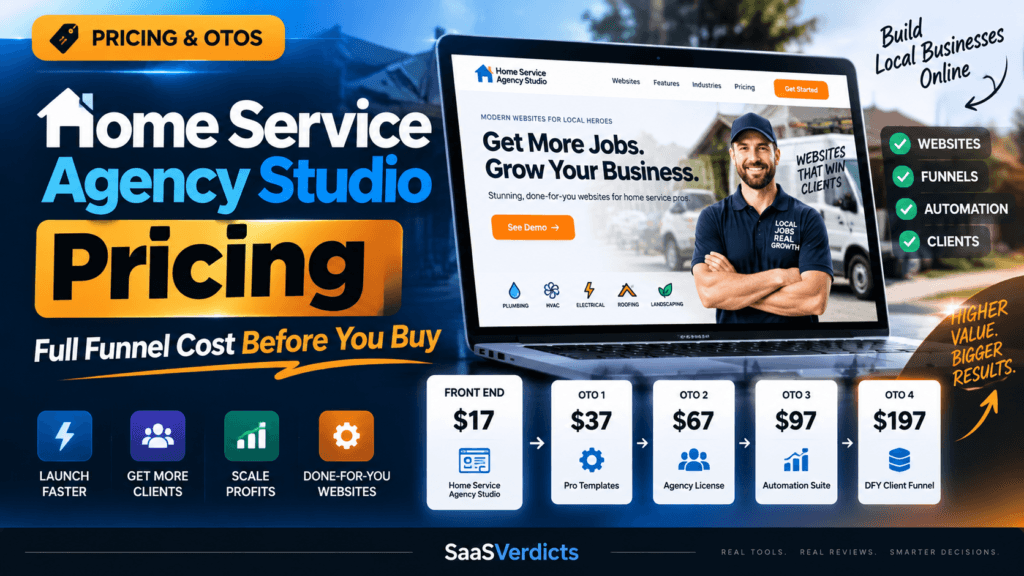
The current $27 launch positioning looks inexpensive compared with the value of a normal client website project. But that comparison is useful only if you actually do outreach. A low-cost production system has no ROI when it remains unused.
Con #1: You still have to sell
This is the biggest expectation gap. The Studio helps with the asset and presentation. You are still responsible for lists, outreach, calls, proposals, pricing and follow-up. Anyone seeking passive income is likely to be disappointed.
Con #2: Template speed can create template laziness
Using a prepared design is efficient. Sending every client almost the same site is not. Add real local photography, accurate services, differentiated copy, reviews, unique branding and business-specific calls to action. The system should make customization faster, not eliminate it.
Con #3: The OTO funnel can tempt you to overbuy
Premium styles, more niches, AI content, booking features, location pages, hosting and broader local-marketing bundles can all sound useful. Buy an upgrade only when you can name the client problem it solves. The core offer should be tested before the funnel becomes your shopping list.
Who should buy it?
- Freelancers who want a defined local niche.
- Local SEO providers adding website work.
- Agencies that want faster demos and delivery.
- Beginners who are willing to prospect consistently.
- WordPress users who want a repeatable client-site process.
Who should skip it?
- Anyone expecting the software to find and close clients.
- Anyone who wants fully bespoke coded sites for every project.
- Anyone unwilling to maintain WordPress or arrange hosting.
- Anyone buying solely because the price looks cheap.
Bottom line
The strongest advantage is focus: niche-specific starting points plus a demo workflow. The strongest limitation is equally clear: you still need to operate an agency. If that is exactly what you plan to do, the tool can be useful leverage. If you are trying to avoid sales and client work, it is the wrong product.