
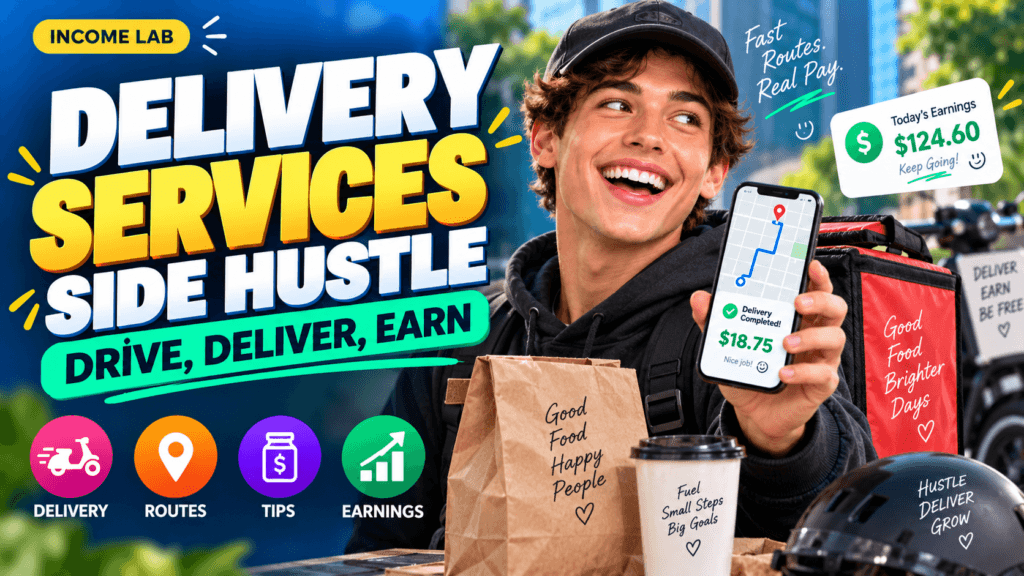
A delivery services side hustle appeals to people who want flexible work, a relatively short path to the first paid task and the ability to choose when they are available. The category is broader than food delivery. You can deliver groceries, parcels, prescriptions where permitted, documents, flowers, retail orders, furniture, local business supplies or direct customer purchases, and you can work through an established app or build an independent local service. The headline payout is only part of the economics. Vehicle costs, fuel, insurance, maintenance, waiting time, parking, taxes and unpaid travel between jobs can materially change what you actually keep. This guide explains how to evaluate delivery work professionally, choose the right model, track true profit and use delivery as either a quick-income option or a stepping stone toward a more controlled local service business.
Understand the Main Types of Delivery Side Hustles
Delivery work falls into several business models, and each has different costs and scheduling patterns. Food delivery is usually concentrated around lunch and dinner. Grocery delivery can involve shopping time in addition to driving. Parcel and retail delivery may have larger route blocks with many stops. Local courier work can involve documents, small packages or business-to-business deliveries where reliability matters more than consumer demand spikes. Some people also offer independent pickup-and-drop services for local customers who need marketplace purchases collected, forgotten items delivered or small business orders moved across town. Before signing up anywhere, decide whether you want short individual tasks, scheduled route blocks or direct client relationships. That decision affects how much control you have over pricing, the type of vehicle you need and whether the work fits around your main job.
Calculate Net Earnings, Not the Number Shown on the App
The most important delivery-side-hustle habit is calculating net profit after costs. Start with gross payouts, tips and bonuses, then subtract fuel or charging costs, vehicle depreciation, maintenance, tires, parking, tolls, phone data, insurance differences and any equipment you buy. Also count unpaid time: driving to a busy area, waiting for an order, returning from a distant delivery and resolving customer problems. A two-hour shift that pays well on screen may be less attractive after thirty miles of driving and forty minutes of unpaid waiting. Track at least four numbers for every work session: total revenue, total miles or kilometers, total active hours and total clock hours. After several weeks, you will know which time windows and delivery types actually create profit instead of relying on promotional claims or one unusually good shift.
Choose the Vehicle That Matches the Job
A car is not automatically the best delivery vehicle. In dense urban areas, a bicycle, e-bike or scooter can reduce fuel, parking and maintenance costs while moving efficiently through short routes. A car provides weather protection, range and capacity, while a larger vehicle can unlock bulky-item or multi-parcel work but increases operating cost. The best vehicle is the one you already own and can legally and safely use for the jobs available in your area. Avoid buying an expensive vehicle purely because a side-hustle income video suggests strong earnings; validate the local demand first. If you use a personal vehicle commercially, check your insurance terms and local requirements. A profitable delivery side hustle can become unprofitable very quickly if one accident, repair or insurance issue is not properly planned for.
Work the High-Demand Windows Instead of Staying Online All Day
Flexible work becomes more profitable when you treat time as inventory. Food orders often cluster around meals, grocery demand can increase in evenings and weekends, and business courier work may be stronger during office hours. Your local market will vary, so use your own records rather than assuming a universal schedule. Compare earnings per clock hour across different periods and stop working windows that consistently create too much waiting. A side hustler with a full-time job can focus on two or three high-demand blocks instead of spending every evening available. That approach protects energy and reduces unnecessary mileage. Our guide to making extra income while working full time goes deeper into capacity planning, while weekend side hustles will cover Saturday and Sunday options beyond delivery.
Use Multi-App Work Carefully
Some delivery workers keep more than one platform available so they are not dependent on one demand source. The strategy can reduce idle time, but it also creates risk if you accept overlapping orders that cannot be completed reliably. Late deliveries, rushed driving and poor customer communication can damage ratings and may create account problems. If you use more than one app, treat availability as a way to choose the best next task rather than as permission to stack unrealistic commitments. Pause or decline new work once you accept a route that requires full attention. The real objective is not maximizing the number of notifications; it is maximizing profitable, safely completed jobs per hour. Consistent service is valuable because it protects access to future work and reduces the stress that causes side hustlers to quit.
Build a Simple Delivery Profit Tracker
A spreadsheet can turn vague delivery work into a measurable business. Record date, platform or client, gross payout, tips, miles, fuel or charging estimate, parking and tolls, total time and a note about the area or shift. Add a calculated net earnings figure and net earnings per hour. Over time, you may discover that certain zones look busy but produce long unpaid return trips, while another area with smaller individual payouts creates better hourly profit because routes are short. You may also find that one type of order causes excessive waiting. Use that information to create personal acceptance rules. The goal is not to predict every job perfectly; it is to improve your decisions with evidence. If you eventually turn independent, the same records help you price direct deliveries instead of guessing what customers should pay.
Independent Local Delivery Can Create Better Control
App-based work is convenient because the platform finds customers, processes payments and supplies routing information, but the trade-off is limited control over pricing and job allocation. An independent local delivery service requires more selling but can create stronger economics once you have repeat clients. Small retailers, florists, bakeries, pharmacies where legally appropriate, repair shops, print businesses, event vendors and local ecommerce sellers may need reliable same-day delivery without hiring a full-time driver. Start with a narrow offer and geographic area, then quote a base pickup fee plus distance, urgency or waiting time where appropriate. You will need to handle payment, customer communication, proof of delivery and insurance yourself. Do not leave a platform until direct demand is validated; independent work is a business, not simply an app without the app.
Delivery Work Can Combine With Other Local Services
The strongest local income model may not be delivery alone. If customers already trust you to travel to their homes or businesses, adjacent services can increase the value of each trip. Examples include returns processing, simple errands, document pickup, light moving help, marketplace item collection, donation drop-offs or scheduled business runs. The key is staying within work you can safely and legally perform. Do not transport regulated, hazardous or restricted goods without proper authorization. A clear service menu can also reduce price sensitivity because the customer is paying for convenience and reliability rather than comparing you only with a food-delivery fee. Over time, repeat local clients can make income more predictable than constantly waiting for consumer orders.
Protect Yourself With Safety and Documentation
Delivery work involves road risk, unfamiliar locations, weather, cash handling in some markets and interactions with strangers. Keep your phone charged, use safe parking, avoid entering locations that feel unsafe, and follow platform or client instructions for contactless delivery where available. Document completed deliveries using the approved method and avoid carrying more cash than necessary. If a job involves a valuable item, clarify responsibility before pickup. Independent couriers should use written terms for fragile items, prohibited goods, waiting time and failed delivery attempts. Physical safety is more important than completing one payout. Side-hustle income should improve your financial position, not pressure you into speeding, distracted driving or unsafe property access.
Know When Delivery Is the Right Short-Term Option
Delivery is attractive when you already have suitable transportation, your area has sufficient demand and you need flexible hours. It is less attractive when vehicle costs are high, routes are long, insurance is expensive or your available hours do not match demand. Compare it with other options rather than treating it as the default gig. Quick money jobs may include local tasks that require less driving, while freelance writing or other skill-based work can have a slower start but stronger long-term margins. A useful strategy is to use delivery for immediate cash while building a higher-value service or skill during quieter time.
A Practical 14-Day Delivery Side Hustle Test
Do not make a long-term decision based on one shift. For two weeks, test several realistic time blocks and record every cost. Work a few meal periods, a weekend block and another window that fits your schedule. Track gross revenue, clock hours and mileage, then calculate net hourly earnings after a reasonable vehicle-cost estimate. Note stress, safety, waiting and whether the schedule interferes with your main responsibilities. At the end of the test, decide whether to continue, change zones, change platforms, move to bicycle delivery, seek route-based courier work or use the experience to pitch direct local clients. A short controlled experiment gives you better information than social media earnings screenshots because it reflects your city, vehicle and availability.
Frequently Asked Questions
Is delivery a good side hustle?
It can be when local demand is strong, you have suitable transportation and your available hours overlap with busy periods. The key is net earnings after fuel, maintenance, insurance and unpaid travel. Track your own results for several weeks before deciding whether the work is genuinely worthwhile.
What types of delivery side hustles are available?
Common options include food, grocery, parcel, retail, local courier, document and independent pickup-and-drop services. Availability depends on location and local regulations. Each model has different route lengths, customer expectations, vehicle requirements and peak demand periods, so compare the economics rather than choosing only by brand familiarity.
Can I do delivery work without a car?
In some cities, bicycles, e-bikes and scooters can be effective for short-distance food or small-parcel deliveries. They can reduce fuel and parking costs but may be limited by weather, road safety, cargo size and local rules. Verify what each platform or client permits before accepting work.
How do I calculate real delivery earnings?
Add all payouts and tips, then subtract vehicle or bicycle operating costs, parking, tolls, phone expenses and other direct costs. Divide the remaining amount by total clock time, not only active delivery time. That gives a more honest net hourly figure and helps identify profitable shifts and areas.
Should I use multiple delivery apps?
Using more than one app can reduce idle time, but only if you avoid conflicting commitments. Accept one realistic route at a time and prioritize safe, on-time completion. Trying to stack too many orders can create delays, customer complaints and unsafe driving pressure.
How can I make delivery work more profitable?
Work high-demand windows, reduce unpaid mileage, choose dense service areas, track costs, avoid excessive waiting and use the most economical suitable vehicle. Repeat local routes and direct business clients can also improve predictability because you spend less time waiting for random orders.
Can I start my own delivery service?
Yes, but independent delivery requires customer acquisition, payment collection, insurance, scheduling and clear service terms. Start with a small geographic area and a narrow offer, validate repeat demand with a few local businesses, and understand any licensing or insurance requirements before expanding.
Is delivery work good for weekends?
Often, especially for restaurant, grocery, retail and event-related demand, but the best windows depend on your market. Test actual Saturday and Sunday results and compare them with weekday evenings. If delivery is weak locally, our weekend side hustle cluster will provide alternatives that do not depend on driving.