
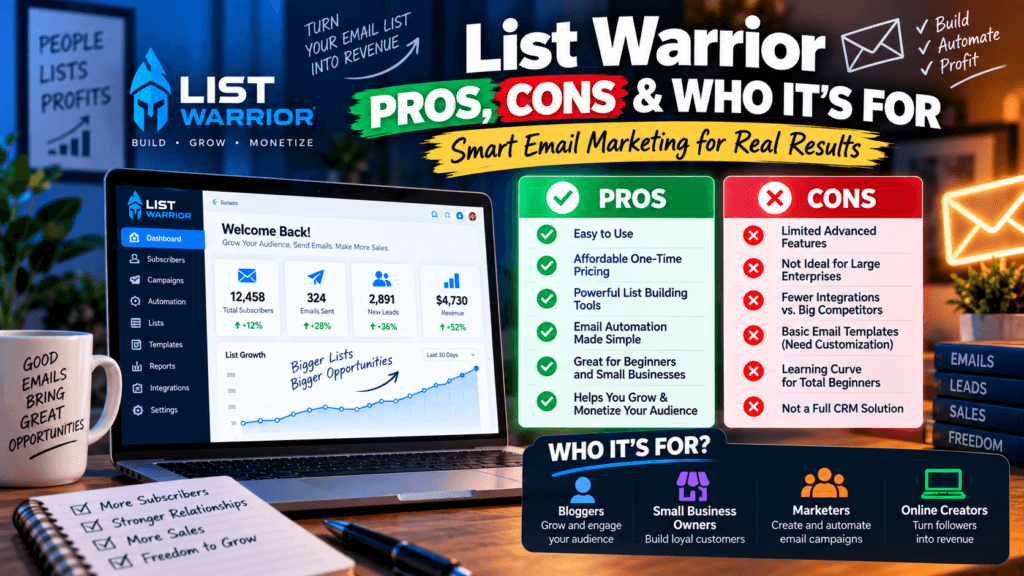
- Focuses on an owned email audience.
- Referral loops can reduce acquisition cost.
- B3 traffic framework diversifies channels.
- Training is structured around a real funnel.
- Works across many niches if incentive is relevant.
- 2019-era product and interfaces.
- Giveaways can attract prize hunters.
- Email deliverability rules have evolved.
- Raw list size can become a vanity metric.
- Historical OTO/refund details may be outdated.
Pro: You Build an Asset You Can Reach Again
Email is not fully platform-independent—you still rely on providers and inbox filters—but the relationship is more portable than a follower count on one social network. That makes list building strategically valuable even when the exact tactic changes.
Pro: Viral Referrals Can Improve Acquisition Economics
If the incentive is aligned, existing entrants can introduce additional prospects. That can lower effective acquisition cost compared with buying every subscriber individually.
Con: Viral Does Not Mean Valuable
Prize hunters can share aggressively and never care about your business. The solution is niche specificity. The giveaway itself should act like a filter.
Con: Legacy Training Requires Modern Deliverability Judgment
Mailbox providers and privacy expectations have changed since 2019. Authentication, engagement, consent and list hygiene deserve much more attention now.
Who Should Buy?
- Marketers who want to build an email asset.
- Businesses with a niche-specific incentive.
- People willing to modernize old tactics.
- Marketers comfortable testing multiple traffic channels.
Who Should Skip?
- Anyone expecting a list to monetize itself.
- Anyone using broad prizes unrelated to the offer.
- Anyone unwilling to manage consent/deliverability.
- Anyone who wants only the newest software interface.
Verify List Warrior Current Offer →
Bottom Line
List Warrior’s durable strength is the owned-audience mindset. Its weakness is age. If you modernize the execution and judge subscribers by engagement, the system can still offer useful ideas.