- Self-hosted and brandable.
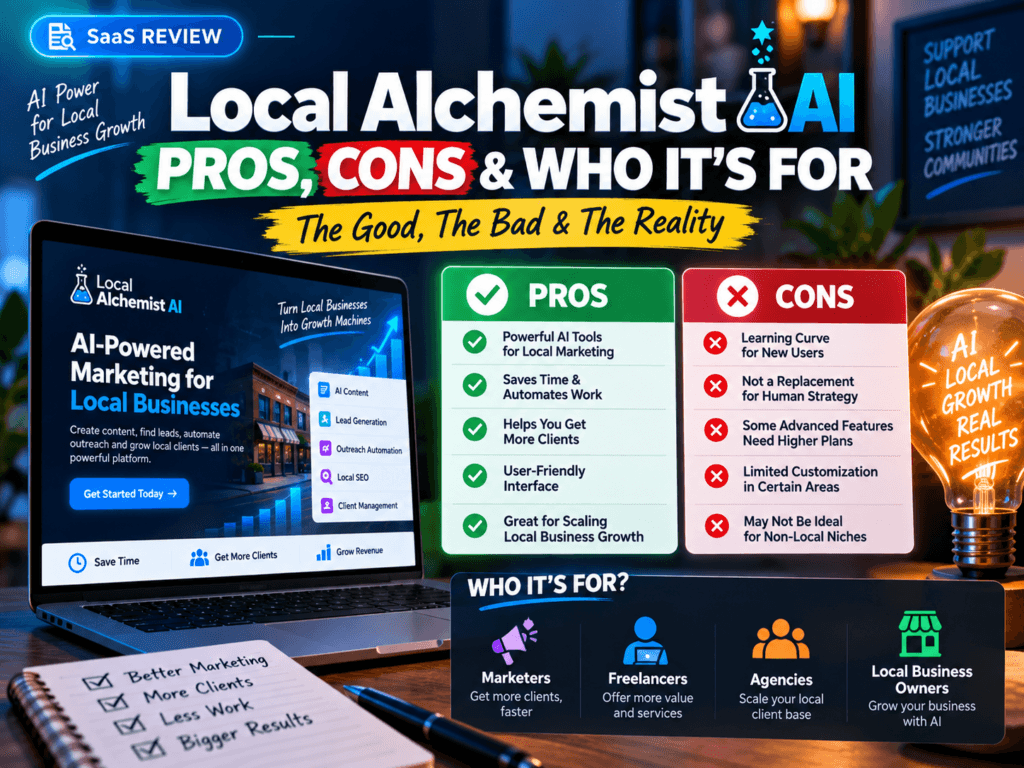
- Six clearly packaged local services.
- Customer accounts and payments.
- Multiple AI providers.
- Credit/subscription model.
- Low front-end launch price.
- Requires hosting/domain setup.
- AI/API usage is an ongoing cost.
- Outputs need human review.
- Commercial client-site rights require the right upgrade.
- No automatic lead generation.
Pro: It Productizes Local Marketing
Local marketing can become a collection of one-off tasks. By packaging six recurring deliverables, the platform makes it easier to define what a customer is actually buying. That clarity can improve pricing and onboarding.
Pro: Self-Hosted Branding Can Increase Perceived Ownership
Your customers can interact with a portal on your domain instead of being sent to a third-party AI tool. For agencies, that presentation can matter because the process feels like part of your service infrastructure.
Pro: Multiple AI Providers Give You Flexibility
OpenAI, Gemini and Claude support means you can compare cost and output quality. It also reduces the risk of building the entire workflow around a single model/provider.
Con: A One-Time Software Price Does Not Mean Zero Ongoing Cost
Hosting, domains, API usage, email and payment fees can continue. A profitable SaaS needs these variable costs built into its plans.
Con: AI Can Confidently Produce Wrong Local Details
Never deliver location, business, legal, pricing or SEO claims without review. The faster the software produces content, the more important your quality-control checklist becomes.
Con: License Confusion Can Be Expensive
If you intend to sell complete installations to clients, confirm the commercial-license tier before taking money. The front end and commercial rights are different purchase decisions.
Who Should Buy It?
- Local SEO consultants.
- Small agencies looking to productize fulfillment.
- WordPress users comfortable with hosting.
- Marketers who want subscription/credit plans.
- Entrepreneurs willing to sell and support a service.
Who Should Skip It?
- People looking for automatic clients.
- People unwilling to review AI outputs.
- Anyone who wants a fully managed SaaS with no hosting responsibility.
- Anyone buying every OTO before validating a client need.
Final Verdict
The strongest reason to buy is not the AI itself; it is the service packaging and client-delivery infrastructure. The biggest reason to pause is whether you actually have a customer acquisition plan and the correct license for your intended business model.