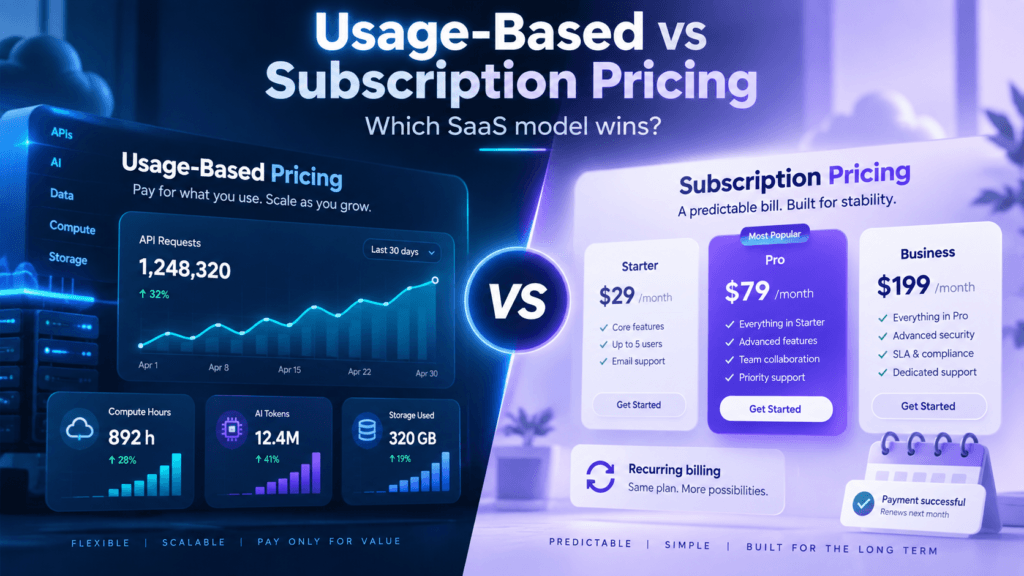

SaaS pricing news is moving quickly in 2026 because AI is changing both software economics and the units vendors use to charge customers. Seat-based subscriptions remain important, but AI agents can now perform work without adding human users, while model inference and automation create variable costs that do not fit comfortably inside unlimited plans. The result is a visible shift toward credits, usage allowances, hybrid pricing, committed consumption and outcome-oriented billing. At the same time, software repricing is not simply a story of universal increases: current price-tracking datasets show both increases and cuts, while packaging changes can be as important as list-price changes. Updated September 5, 2026, this living SaaS Verdicts page tracks the pricing developments that matter most to SaaS founders, buyers and revenue teams. We will focus on changes to models, plans, AI monetization, enterprise commitments and major software price movements rather than repeating every promotional discount.
Atlassian Expands Usage-Based Pricing for AI and Automation
The biggest SaaS pricing development this week is Atlassian’s expansion of usage-based pricing across AI and automation capabilities. In a September 1 company announcement, Atlassian said its model is evolving because AI value can outgrow what seat count alone captures. The company is introducing meters for Rovo credits, automation steps and AI agent resolutions, while paid cloud plans include allowances before extra usage applies. Atlassian says most usage-based billing will take effect on December 3, 2026, giving customers time to observe consumption, set limits and choose whether to upgrade, prepay or pay as they go. This is a significant example of a major SaaS vendor layering consumption pricing on top of existing plan and user-based subscriptions rather than replacing subscriptions entirely. The structure illustrates the broader hybrid SaaS pricing trend: predictable platform access remains, but high-cost or high-value AI activity gets its own meter.
Rovo Credits Show How AI Pricing Is Becoming More Granular
Atlassian’s Rovo documentation provides a clearer picture of where AI SaaS pricing may be heading. Rovo credits are pooled at the organization level and consumed according to the type and complexity of AI interaction. Some embedded AI experiences remain free, while basic and premium interactions can consume credits differently. Atlassian also gives administrators controls to monitor usage, set limits, buy prepaid packs or disable extra usage. This design matters beyond one vendor because it addresses two of the hardest AI pricing problems at the same time: variable cost for the vendor and budget predictability for the buyer. Rather than charging one universal unlimited AI add-on, the model combines included value, pooled usage and paid expansion. Founders should watch whether customers accept this level of granularity and whether pooled credits feel easier to manage than per-user AI add-ons. Buyers should watch the actual consumption rate, not only the headline seat price.
AI Agent Outcomes Are Emerging as a Billable Unit
One of the most important parts of Atlassian’s announcement is not credits but outcomes. Customer Service Management AI agent resolutions are measured when an AI agent completes a customer request without handing the conversation to a human team. That means the vendor is monetizing a completed result rather than merely a human seat or raw compute unit. Outcome-based pricing has been discussed in SaaS for years, but agentic AI makes it more commercially relevant because software can now perform work that previously required employees. The challenge is defining and verifying the outcome fairly. Atlassian’s support documentation describes conditions for what counts as a resolution, illustrating how billing logic increasingly depends on product-level definitions of success. This is a trend to watch across support, sales, finance and workflow automation software. If agents perform more work autonomously, the SaaS industry may need pricing units based on completed work alongside traditional subscriptions and usage meters.
Gartner Warns Buyers About Consumption-Based AI Budget Risk
On September 3, Gartner said general counsel and legal technology buyers should prepare for a shift from predictable per-user subscriptions toward hybrid AI pricing that combines licensing fees with consumption charges. Gartner predicts that by 2028 consumption-based pricing will account for more than 35% of net new corporate legal technology spend with major vendors. The warning is important because it frames AI pricing as a budgeting and procurement issue, not merely a SaaS vendor strategy. Legal, finance and enterprise technology teams need to understand how usage can expand and what controls are available before committing to AI-heavy products. The same concern applies outside legal software. Buyers should request usage estimates, caps, alerts, included allowances and contract treatment for unexpected spikes. Vendors that provide transparent spend controls may gain an advantage over competitors that introduce variable AI charges without giving customers enough visibility.
SAP Is Also Talking About Consumption-Based AI Pricing
Current reporting around SAP reinforces the broader direction. In September 5 reporting on how SAP is responding to AI disruption in enterprise software, company leadership described a shift toward consumption-based pricing for AI capabilities and greater focus on customer outcomes. The strategic logic is familiar: AI can create value without a corresponding increase in human users, so traditional seat counts can become a weaker monetization metric. For mature enterprise SaaS vendors, the likely answer is not abandoning subscriptions but adding consumption or outcome layers where AI changes the economics. This creates a major pricing transition for enterprise buyers because software budgets historically built around licensed users may need to account for agent activity, compute and completed tasks. Founders should watch how established vendors communicate this shift, particularly whether they preserve predictable base contracts while monetizing AI separately.
Seat-Based Pricing Is Not Disappearing—It Is Being Supplemented
The current news does not support a simple conclusion that per-seat SaaS pricing is dead. Human users still receive value from collaboration, administration, security, permissions and access, and many software categories remain naturally seat-based. The change is that seats no longer capture every dimension of value when AI agents, automation and infrastructure perform work independently. Atlassian’s model is a good example because usage-based charges are layered on top of per-user or tier-based subscriptions. This is likely to be a recurring pattern: the subscription or seat provides platform access and predictable recurring revenue, while AI consumption, credits or outcomes provide expansion. The practical implication for SaaS founders is to examine whether one seat can now generate dramatically more variable cost or customer value than before. If so, the pricing architecture may need a second metric rather than a complete replacement of the original model. See our per-user pricing analysis for the trade-offs.
Software Price Tracking Shows Repricing Is Not Only About Increases
Independent software price trackers are also showing a more complicated 2026 market than the common “SaaS prices always go up” narrative. One live SaaS price index reported a weighted decline across its detected changes over the most recent 90-day window as of September 4, while another August 2026 analysis of 127 detected software price changes found increases and decreases were almost evenly split. These datasets cover different products and methodologies, so they should be treated as directional evidence rather than a universal market index. The important takeaway is that companies are actively repricing in both directions. Some vendors increase prices to capture more value or cover higher costs; others reduce entry prices, simplify plans or reposition against new AI competition. Packaging changes can also occur without a clean list-price increase. Buyers should therefore track the exact plan, included features and limits rather than assuming renewal inflation is the only pricing risk.
Packaging Changes Matter as Much as Headline Price Changes
A software company can change the economics of a plan without changing the visible monthly number. It can reduce included usage, move a feature to a higher tier, add a seat minimum, change annual discounts, introduce AI credits or create new overages. This is why SaaS pricing news needs to track packaging as well as list prices. In 2026, the shift to AI makes this especially important because vendors can keep core subscription prices stable while introducing separate consumption meters for new capabilities. A buyer comparing this year’s price with last year’s price may therefore miss the more important change: what the subscription now includes. Founders should also recognize that packaging is often a cleaner monetization lever than a blanket price increase. A new AI or enterprise tier can capture additional willingness to pay without forcing every existing customer into the same increase. Our SaaS pricing best practices guide explains how packaging, value metrics and price changes interact.
Usage Visibility Is Becoming Part of the Product
Another notable trend is that pricing controls are moving inside the software itself. Atlassian is giving administrators usage dashboards, forecasts and the ability to set or disable extra usage. This reflects a broader requirement for variable pricing: the customer needs to see and control the meter before the invoice arrives. Usage-based pricing that exists only in billing documentation creates too much risk of bill shock. We expect more SaaS vendors to treat spend visibility, caps, alerts and forecasting as core product features, particularly in enterprise AI. This also changes product management because billing information becomes part of the user experience. A well-designed usage dashboard can increase adoption by making customers comfortable scaling activity, while a poor one can cause teams to suppress usage out of fear. The challenges in implementing usage-based pricing guide covers metering and budget control in detail.
What SaaS Founders Should Watch Next
The most important question for founders is whether AI is changing the relationship between customer value and the current value metric. If one user can now run agents that complete hundreds of tasks, a pure seat price may fail to capture expansion or protect margin. If the company moves to consumption pricing, however, it must avoid making successful product use feel financially dangerous. Watch how major vendors balance included allowances, extra usage, prepaid packs and commitments. Also watch whether outcome pricing becomes more common as agent reliability improves. Revenue teams should track customer reactions, downgrade behavior and procurement objections because new pricing architecture can create as much friction as it solves. The objective is not to copy whichever model is fashionable this quarter. Use customer value, usage distribution and cost-to-serve to decide whether seats, credits, usage or outcomes actually make sense for your product.
What SaaS Buyers Should Watch Next
Buyers should compare total expected software cost rather than only the public subscription rate. Ask whether AI, automation, storage or transactions sit outside the base plan, how usage is measured, what happens above allowances, and whether administrators can set hard caps. For annual contracts, request a realistic consumption forecast and understand whether unused committed usage expires or rolls forward. Track feature movement between tiers because a stable list price can still become a more expensive renewal if important capabilities move into add-ons. Enterprise procurement should also evaluate the operational impact of switching from seats to usage: forecasting, internal chargeback and budget ownership can change. SaaS pricing is becoming more dynamic, which makes commercial observability as important for buyers as technical observability. A pricing calculator or usage dashboard can be as valuable as a discount when it prevents unexpected spend.
SaaS Pricing News Outlook for the Rest of 2026
For the remainder of 2026, the strongest pricing theme is likely to remain hybridization rather than a universal move to one model. Traditional subscriptions provide revenue and budget predictability, seats still monetize human access, and AI introduces variable units that can be charged through credits, usage or outcomes. Enterprise vendors will need to make these combinations easier to budget, while self-service products will need to keep pricing simple enough that buyers can still purchase without a sales conversation. We also expect continued experimentation with plan packaging as vendors respond to AI competition and changing product costs. SaaS Verdicts will update this page when major software companies announce material changes to pricing models, public plan prices, AI allowances, enterprise commitments or usage rules. The goal is to build a current pricing-news hub rather than a one-time article that becomes stale after publication.
Final Verdict
The current SaaS pricing news points to a structural shift in how software companies monetize AI rather than a simple wave of price increases. Atlassian’s expanded usage-based model, Gartner’s warning about AI consumption budgets and SAP’s discussion of consumption pricing all show the same pressure: human seats no longer capture every unit of software value or cost. At the same time, current price-tracking data suggests repricing includes cuts and packaging changes as well as increases. Founders should focus on value metrics, transparency and margin rather than blindly adding AI surcharges. Buyers should focus on total expected cost, included allowances and spend controls rather than only the headline subscription price. The winners will likely be pricing models that let customers adopt AI confidently while giving vendors a sustainable way to monetize the additional work software now performs.
Sources & Further Reading
Primary and current sources for this update include Atlassian’s September 1, 2026 announcement on expanded usage-based pricing at Inside Atlassian, Atlassian’s usage-based pricing and control documentation, and Gartner’s September 3, 2026 newsroom release on consumption-based AI pricing. Broader context includes current reporting on SAP’s AI strategy and independent software price-tracking datasets. Because public pricing changes frequently, exact vendor rates and allowances should always be verified on the vendor’s current pricing or billing documentation before a purchase or renewal decision.
Frequently Asked Questions
What is the biggest SaaS pricing news in September 2026?
One of the most significant developments is Atlassian’s September 1 expansion of usage-based pricing for AI and automation. The company is using meters such as Rovo credits, automation steps and AI agent resolutions, with allowances included in many paid plans and extra usage billing scheduled to take effect for most meters on December 3, 2026. The move illustrates the broader industry trend toward hybrid pricing that combines existing subscriptions with AI consumption or outcomes.
Are SaaS prices increasing in 2026?
Some vendors are raising prices, but available tracking data shows a more mixed market with both increases and decreases. Pricing economics can also change without a headline increase when vendors move features between tiers, reduce allowances, change discounts or add usage charges. Buyers should compare the complete plan structure over time rather than focusing only on the published monthly number. Different trackers cover different samples, so no single index should be treated as a universal measure of SaaS inflation.
Why are SaaS companies moving to usage-based AI pricing?
AI creates variable compute and model costs, and AI agents can produce substantial value without requiring more human seats. A fixed per-user subscription can therefore become poorly aligned with both vendor cost and customer value. Usage-based or hybrid pricing lets revenue increase with AI activity while preserving a base subscription for platform access. The challenge is giving customers enough spend visibility, allowances, caps and forecasting to prevent unpredictable bills from discouraging adoption.
Is per-seat SaaS pricing going away?
No. Per-seat pricing remains useful for collaboration, access, administration and many traditional business workflows. The current trend is toward supplementing seats when AI, automation or infrastructure creates an additional value dimension. A product may continue charging per user while adding AI credits, usage allowances or outcome charges. The correct model depends on how customers receive value. Seat pricing becomes weaker when customer value grows substantially without adding human users.
What should buyers ask before accepting usage-based SaaS pricing?
Ask what unit is measured, what usage is included, how overages are priced, whether spend limits can be set, how often usage data updates and what happens if activity spikes unexpectedly. Enterprise buyers should also understand minimum commitments, prepaid packs, rollover rules and renewal treatment. Request a realistic cost estimate based on expected usage rather than relying only on a low starting price. Strong vendors should provide dashboards and alerts that let administrators control spending before invoices arrive.
How often will SaaS Verdicts update this pricing-news page?
The page is designed as a living 2026 pricing-news hub and should be updated when material developments occur, including major vendor price changes, new AI monetization models, changes to public plans, usage allowances, enterprise commitments or significant pricing research. Small temporary promotions do not necessarily warrant an update. The emphasis is on developments that change how SaaS products are bought, budgeted or monetized and that can inform founders, finance teams and software buyers.