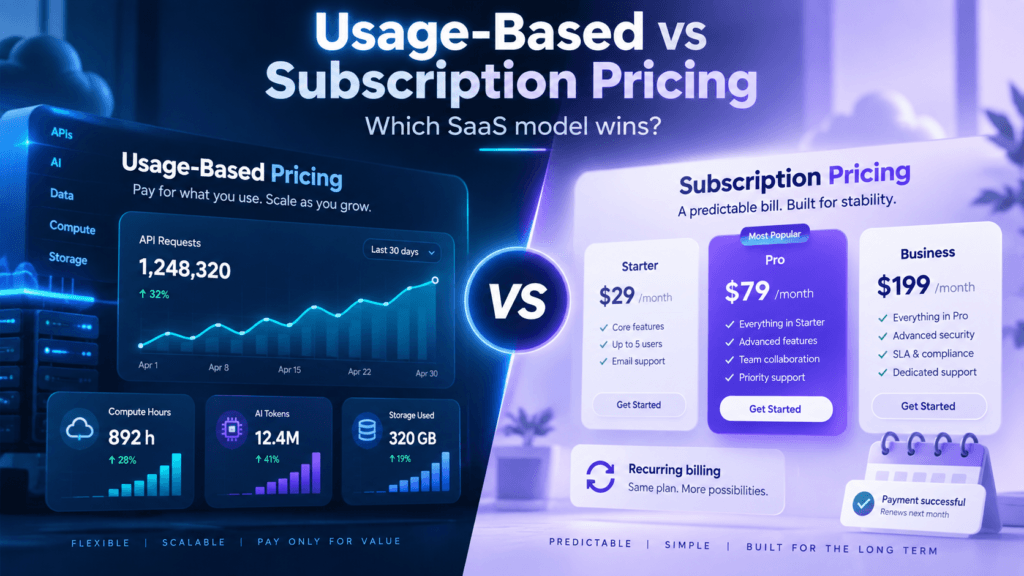

A strong B2B SaaS pricing strategy has to work across customers that can differ dramatically in size, budget, procurement process, usage, support needs and economic value. The price that feels natural for a ten-person startup may be irrelevant to a global enterprise that requires SSO, compliance reviews, implementation, SLAs and negotiated legal terms. B2B pricing therefore needs more than a public plan table. It needs a value metric that scales with customer success, clear segmentation, repeatable enterprise rules, disciplined discounting, sensible annual commitments and a path for accounts to expand without feeling penalized. The best strategy lets small customers start with minimal friction, gives mid-market buyers enough flexibility to grow, and captures additional enterprise value without turning every contract into an arbitrary negotiation. This guide explains how to design B2B SaaS pricing from customer research through plan architecture, sales execution, renewal and optimization.
Start With B2B Customer Segmentation
Pricing strategy should begin by identifying meaningful differences between customer groups. Segment by factors that change value or buying behavior, such as company size, team structure, use case, transaction volume, regulatory requirements, implementation complexity, geographic scope or business impact. Do not rely only on broad marketing labels. The segmentation should explain why one customer is willing to pay materially more than another. SMB buyers may prioritize low commitment, transparent pricing and fast onboarding. Mid-market accounts may need integrations, advanced reporting and stronger administration. Enterprise buyers may require governance, security, procurement, legal review, custom terms and dedicated service. These differences influence both price and sales motion. A single public plan can serve multiple segments only when their needs remain similar. Once commercial behavior diverges, the pricing architecture should reflect that reality rather than forcing every account through the same self-service structure.
Choose a B2B Value Metric That Scales
The value metric determines how customer spend increases and is one of the most important choices in B2B pricing. Seats work when team adoption creates value, contacts work when marketing reach matters, usage works for infrastructure and APIs, transactions work when customer activity drives outcomes, and platform fees can work when the software delivers organization-wide value beyond individual users. A strong metric is understandable and increases as the customer becomes more successful. A weak metric can discourage product adoption or allow high-value enterprise accounts to remain underpriced. Test the metric against realistic customer profiles. Calculate what a small business, a 200-person company and a large enterprise would pay, then compare the result with the value created and the cost to serve each account. If the relationship becomes unreasonable at either extreme, a hybrid model or segment-specific structure may be necessary.
Design SMB Pricing for Speed and Transparency
SMB customers generally have shorter buying cycles, smaller budgets and less tolerance for sales friction. Public pricing, monthly options and self-service onboarding can therefore improve conversion. The plan should solve a clear problem without requiring buyers to configure a complicated package. Two or three transparent tiers may be enough, and a free trial or low-cost entry can work when product adoption is easy. SMB pricing must still protect economics because low-price accounts can become unprofitable if they require significant support or infrastructure. Track customer acquisition cost, onboarding effort, payment-processing expense and free-user cost if freemium is involved. Avoid designing the lowest plan so narrowly that growing customers leave instead of upgrading. The entry product should create real value while preserving natural expansion through team size, automation, higher limits or advanced capabilities.
Build Mid-Market Pricing Around Growth and Control
Mid-market customers often sit between self-service simplicity and enterprise complexity. They may accept annual contracts, implementation and higher prices in exchange for integrations, automation, reporting, permissions, data controls and stronger support. This segment frequently benefits from a Business or Growth tier that is clearly more capable than the entry plan without requiring a fully custom enterprise process. Per-user, tiered or hybrid pricing can work well because mid-market accounts often have enough scale for expansion revenue to matter. The pricing page should make the value of moving into this tier obvious. If customers reach the mid-market plan only because they hit arbitrary limits, retention can suffer. Use product data and sales conversations to identify the capabilities genuinely associated with growing organizations. The SaaS pricing ladder guide provides a framework for creating these progression points.
Use Enterprise Pricing for Complexity, Not Secrecy
Enterprise pricing can be custom because large accounts vary in users, usage, implementation, security, support and procurement requirements. Custom should not mean arbitrary. The company needs a repeatable internal framework that defines platform fees, value metrics, minimum commitments, modules, services, discounts and approval thresholds. Similar accounts should receive commercially defensible pricing even when the public page uses “Contact Sales.” Enterprise buyers often care more about total business value, risk, service and reliability than the lowest unit price, but procurement will still challenge inconsistencies. Create a clear business case showing how the price connects to organizational scale and outcomes. The enterprise software pricing models guide covers platform fees, seats, usage, modules and custom contracts in more depth.
Decide When to Use Per-Seat Pricing
Per-seat pricing is attractive in B2B because it is easy to forecast and creates expansion revenue as teams grow. It works best when each additional user receives direct value and when wider adoption increases the usefulness of the product. The weakness is that customers may restrict seats, share accounts or exclude occasional users to control cost. This can work against product strategy when broad organizational adoption is important. Role-based seats, free viewers or platform fees can reduce this tension. AI also changes the calculation because software can create more value without adding human users. If AI usage or automated workflows become significant, seats may need to be combined with credits or usage. Our per-user pricing for SaaS guide explains when seat pricing remains strong and when another metric creates better alignment.
Decide When to Use Usage or Hybrid Pricing
Usage-based pricing is strong when customers vary significantly in transactions, messages, data, compute, API activity or AI consumption. It allows small customers to start with lower spend while larger accounts naturally generate more revenue. The main B2B challenge is budget predictability, especially for finance and procurement teams that need annual commitments. A hybrid structure can solve this by combining a recurring platform fee or minimum commitment with included usage and overages. The vendor gains a revenue floor while customers receive clearer budgeting. Usage dashboards, spend alerts and explicit overage rules are essential. Do not use usage simply because it captures more revenue; the metric should track customer value and remain understandable. The hybrid pricing model and usage-based pricing challenges guides cover the implementation trade-offs.
Use Annual Contracts Deliberately
Annual contracts are common in B2B because they improve revenue visibility, reduce renewal frequency and align with business budgeting cycles. The commitment can justify a lower effective monthly rate, implementation effort or enterprise service. The annual discount should be based on economics rather than copied automatically from competitors. Calculate the value of upfront cash, expected retention improvement and reduced billing frequency, then compare those benefits with the revenue given up. For enterprise deals, discounts may be tied to term length, seat commitment, volume or prepayment rather than a public percentage. Monthly options can remain useful for SMB customers who value flexibility. Present billing clearly so buyers understand whether prices shown as monthly equivalents are actually billed annually. Pricing transparency protects trust and reduces disputes during procurement.
Create Expansion Paths Before You Need Them
B2B SaaS becomes more valuable when customer spending can increase naturally as adoption grows. Expansion may come from additional seats, greater usage, higher tiers, new modules, locations, premium support or enterprise controls. The pricing strategy should define these paths before sales teams begin inventing custom add-ons. Each expansion trigger should correspond to higher customer value. If a growing team needs more automation or analytics, the upgrade makes sense. If the company forces an upgrade because of an arbitrary restriction unrelated to value, the customer may negotiate or leave. Analyze product usage to identify behaviors that predict successful expansion. Strong net revenue retention comes from customers choosing to spend more because the product becomes more important, not from creating as many billable line items as possible.
Govern B2B SaaS Discounts
Discounting is often necessary in B2B sales, but it can destroy pricing integrity when sales representatives use it as the default closing tool. Define discount bands, approval levels, acceptable reasons and what the company receives in exchange. Larger commitments, annual prepayment, multi-year contracts, strategic references or higher volume can justify lower unit economics. Competitive pressure alone should not automatically produce a large concession. Track discount rate by salesperson, segment, product and renewal because patterns reveal whether pricing, packaging or sales positioning is the underlying issue. Existing discounts should be reviewed at renewal rather than becoming permanent by default. The SaaS pricing discounts guide provides a more detailed governance framework. The objective is flexibility without teaching customers that every published price is merely an opening negotiation.
Align Pricing With the Sales Motion
The complexity of the pricing model should match how the product is sold. A low-ACV self-service product cannot support a long discovery process or custom quote for every customer because sales cost would overwhelm revenue. High-ACV enterprise software can support more complex pricing when implementation, legal, security and procurement already require human involvement. Mid-market pricing may combine public starting points with sales-assisted expansion. The strategy should therefore consider customer acquisition cost, sales-cycle length, onboarding effort and payback period. If the company needs a salesperson for every $50 monthly account, either the price or the sales process is likely wrong. Conversely, an enterprise product with substantial value may be underpriced if it uses a self-service model simply because transparent pricing feels modern. Sell customers the way they naturally buy while keeping the commercial architecture consistent.
Measure Pricing by Retention and Expansion, Not Just New ARR
A B2B pricing strategy can produce strong new sales while creating poor long-term economics. Track average contract value, gross margin, sales-cycle length, discounting, expansion revenue, downgrade rate, gross revenue retention, net revenue retention, renewal behavior and support cost. Segment these metrics by SMB, mid-market and enterprise because averages hide important differences. A low-priced SMB tier may convert well but churn quickly, while enterprise contracts may show slower acquisition and stronger lifetime value. Usage-based products need additional metrics such as consumption growth, bill volatility and commitment utilization. Pricing should be judged by revenue quality across the customer lifecycle. A commercial model that attracts the right accounts, preserves margin and expands with customer success is stronger than one optimized only for initial bookings.
Review B2B Pricing as the Product Moves Upmarket
SaaS products often begin with one simple plan and later attract larger organizations. Moving upmarket introduces new value, costs and buying requirements that the original pricing may not capture. Security, audit logs, SSO, implementation, data residency, procurement, legal review and customer success all create reasons for a more sophisticated enterprise structure. Review pricing when these patterns appear rather than letting sales teams handle them through ad hoc discounts. The company may need a new tier, platform fee, minimum commitment or services package. Existing self-service plans can remain unchanged for smaller customers. A formal annual pricing review is useful, but major product or segment changes justify review sooner. The SaaS pricing guide provides a broader process for reviewing value metrics, willingness to pay and product economics.
Final Verdict
B2B SaaS pricing should be designed around differences in customer value and buying behavior rather than around one universal price architecture. Keep SMB pricing simple and transparent, give mid-market customers a clear path to greater capability, and make enterprise pricing repeatable even when contracts are customized. Choose a value metric that scales with customer success, use annual commitments and discounts deliberately, and create expansion paths that feel like customer progress rather than penalties. Measure the strategy across acquisition, margin, retention and expansion. The strongest B2B pricing system allows the company to serve several segments without turning every deal into an exception and allows customers to understand why they pay more as their organization receives more value.
Frequently Asked Questions
What is a B2B SaaS pricing strategy?
A B2B SaaS pricing strategy is the complete commercial framework for business customers, including the value metric, plans, price points, annual contracts, discounts, enterprise rules, usage limits and expansion paths. It should reflect how different customer segments buy and receive value. SMB, mid-market and enterprise buyers often require different packaging and sales motions even when they use the same core product. The strategy should remain coherent enough that customers and sales teams can understand what drives price.
What is the best pricing model for B2B SaaS?
There is no universal best model. Per-seat pricing works when human adoption drives value, usage pricing works when consumption varies, tiers work when customer needs change with maturity, and hybrid pricing works when both recurring platform value and variable usage matter. Enterprise accounts may require custom commitments and modules. The best model is the one that customers understand, supports healthy margins and allows revenue to expand naturally as customer value grows.
Should B2B SaaS show prices publicly?
SMB and self-service products generally benefit from public pricing because buyers can qualify themselves and purchase quickly. Enterprise pricing can be custom when account requirements vary substantially, but the page should still explain what drives the quote. Mid-market products can use public starting points with sales-assisted options. Transparency should match the buying motion. Hiding prices when the product is standardized can create unnecessary friction, while forcing a fixed public price onto complex enterprise contracts can create poor economics.
How should enterprise SaaS be priced?
Enterprise SaaS often combines a platform fee or minimum annual commitment with users, usage, modules, implementation and service. Pricing should reflect organizational value, complexity and cost-to-serve while following repeatable internal rules. Define price floors, discount authority and which variables legitimately affect the quote. Custom pricing should not mean arbitrary negotiation. Similar enterprise accounts should receive commercially defensible structures, and the sales team should be able to explain why the customer is paying more than a smaller organization.
How much annual discount should B2B SaaS offer?
The discount should reflect the value of longer commitment, upfront cash, reduced churn risk and improved revenue visibility. There is no universal percentage. SMB products may use a public annual discount, while enterprise deals may exchange better unit pricing for term length, volume or prepayment. Calculate the economics rather than copying a competitor. Excessive annual discounts can unnecessarily reduce lifetime value from customers who would have committed anyway.
How often should B2B SaaS pricing be reviewed?
A formal annual review is a useful baseline, but pricing should also be reviewed when customer segments, product value, costs or sales motion change materially. Moving upmarket, adding AI, increasing enterprise service or seeing consistent discount pressure can all justify an earlier review. A review does not always require a price increase. It can result in new packaging, a better value metric, different usage allowances or more disciplined enterprise rules.